Why Foshan Matters in Global Small-Appliance Manufacturing: Capacity, Quality and Sourcing Depth
2 October 2026
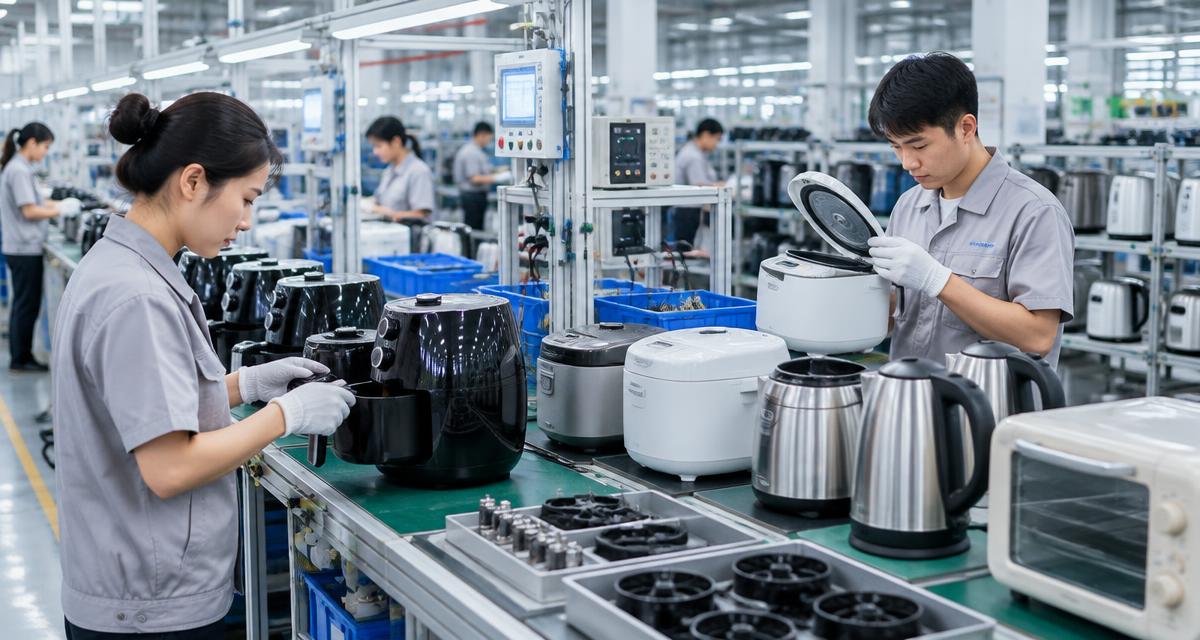
Foshan is one of China’s best-known home-appliance manufacturing clusters. Its value to global buyers is not based on a single factory or product. It comes from the concentration of assembly plants, component suppliers, tooling specialists, packaging providers, testing services and export operators across Foshan and the wider Pearl River Delta.
For importers, that density can shorten product development, make component alternatives easier to source and support orders ranging from trial lots to sustained production. It does not remove the need for due diligence. Rather, it gives qualified buyers a deeper supplier base to evaluate.
A manufacturing cluster, not just a production address
Foshan’s Shunde district is widely associated with home appliances. The surrounding manufacturing network covers categories such as air fryers, rice cookers, electric pressure cookers, kettles, fans, blenders, vacuum cleaners, water-related appliances and personal-care products.
A cluster matters because an appliance is a system of parts: heating elements, motors, control boards, plastic and metal housings, glass, cables, plugs, packaging and printed materials. When relevant suppliers are geographically concentrated, factories can compare components, adjust production plans and resolve engineering or packaging issues more efficiently.
What “capacity” means for an importer
Capacity should not be reduced to a single annual output number. Global buyers need to understand several kinds of capacity:
- tooling and engineering capacity for model changes
- component availability for the selected specification
- assembly-line capacity during the required delivery window
- testing and quality-control capacity
- packaging and labeling capacity for the destination market
- the ability to repeat the same specification consistently
A factory may have a large headline output but limited availability during peak season. Another may be better suited to smaller trial orders. Buyers should confirm the production schedule, bottleneck components and inspection plan for each order.
Why Foshan supports product variety
The local ecosystem serves both major appliance groups and specialized manufacturers. This helps create a broad ladder of products, from simple mechanical models to digital appliances with multiple programs and connected features.
For wholesalers, that range can support good-better-best assortments. For online and live-commerce sellers, it can make visual differentiation easier through capacities, finishes, control panels and accessory bundles. For private-label buyers, the same ecosystem can support packaging, manuals and market-specific configurations, subject to quantity and compliance requirements.
Quality is a process, not a place name
“Made in Foshan” is not, by itself, a quality guarantee. Product quality depends on specification control, component selection, production discipline, inspection and traceability. A professional sourcing process should review:
- incoming component inspection
- first-article confirmation before mass production
- in-line assembly checks
- electrical safety and functional testing
- appearance and packaging inspection
- sampling criteria for pre-shipment inspection
- corrective actions when a defect is found
The buyer’s written specification should define measurable acceptance criteria. Photos and certificates are useful, but they should not replace product sampling and appropriate third-party verification where required.
Export readiness and market adaptation
A product that works for one country may not be ready for another. Export preparation can include voltage and frequency, plug type, power rating, language, marking, packaging, user instructions and destination-specific conformity documentation.
Foshan factories with export experience may already understand common requirements, but buyers remain responsible for confirming current rules in the destination market. Certification should be checked against the exact model and critical components rather than assumed from a similar-looking product.
Where surplus stock enters the picture
Large and diverse production networks also generate legitimate surplus: cancelled orders, overproduction, packaging transitions, discontinued colors and other inventory that is no longer needed by the original buyer.
When verified and clearly graded, these lots can offer wholesalers a faster route to market. They can also help factories recover working capital and warehouse space. The transaction still requires careful checks of ownership, condition, quantity, compliance and any branding restrictions.
BulkVolt’s public listings deliberately mask brands, factory identities and exact addresses. Vetted buyers can request fuller information and inspection evidence inside the controlled transaction process.
How buyers should qualify a Foshan supplier
1. Confirm the legal and commercial entity
Check who owns the goods, who will invoice the order and who is responsible for production or stock release.
2. Match the facility to the product
A trading company, assembly factory and component producer perform different roles. Buyers should understand which work is completed at the inspected site.
3. Review the exact product file
Confirm model, bill of materials where appropriate, power specification, plug, packaging, accessories, manuals and destination-market requirements.
4. Define inspection before payment milestones
Agree on sampling, defect classifications, functional tests and evidence before final payment or shipment.
5. Start with a controlled order
A smaller initial order can validate communication, quality consistency and logistics before the relationship scales.
Frequently asked questions
Is Foshan the only small-appliance manufacturing base in China?
No. China has several important appliance and electrical manufacturing clusters. Foshan is especially relevant because of its dense home-appliance ecosystem and proximity to the wider Pearl River Delta supply chain and major South China ports.
Can Foshan factories handle both OEM orders and ready stock?
Capabilities vary. Some suppliers focus on large OEM programs, others on flexible private-label work, and some hold ready or surplus inventory. Buyers should qualify the supplier and lot rather than assume every factory offers all three.
Does a lower price mean lower quality?
Not automatically. Price can reflect volume, configuration, materials, packaging, stock status or a cancelled order. Buyers need a clear specification and inspection result to understand value.
What should be checked before shipping?
At minimum: product identity, quantity, condition, electrical specification, accessories, labeling, packaging, required documentation and the agreed inspection result.
The sourcing advantage in one sentence
Foshan gives global buyers access to a concentrated small-appliance supply chain with product breadth, production flexibility and export experience—but dependable results still come from precise specifications, verification and disciplined quality control.
Source note: Export trend context references public reporting by the State Council of the People’s Republic of China on Chinese home-appliance manufacturers’ overseas expansion, 17 May 2024.
Share this article
Want this week's stocklist?
Request access to BulkVolt and buy surplus stock directly from vetted Foshan factories.